English
 French
 Spanish


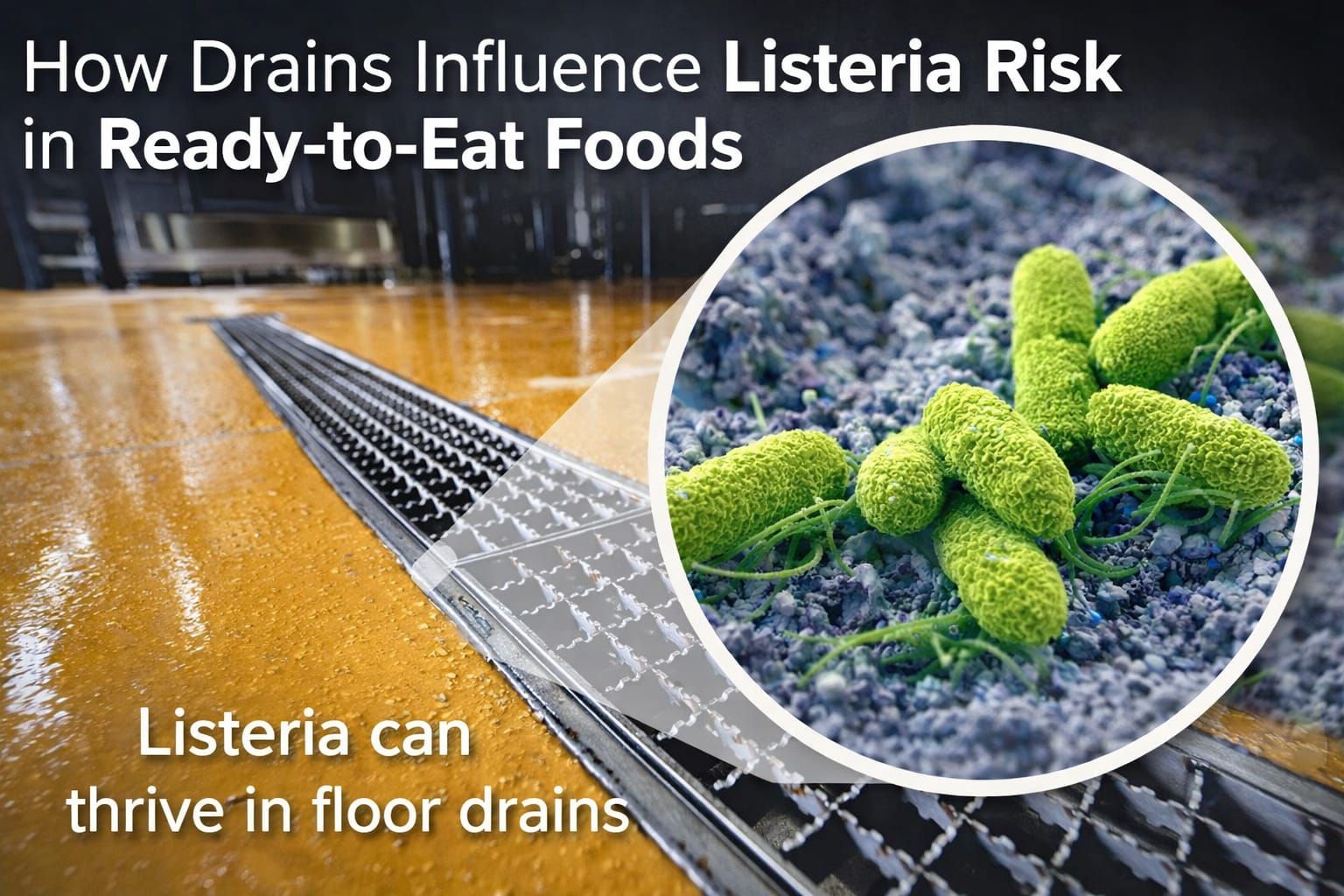
Have you ever wondered why so many Listeria investigations end up pointing at floor drains?
Because drains provide the perfect hideout: constant moisture, food residues, cold temperatures, and tough biofilms that shield Listeria from sanitizers and routine cleaning.
For ready-to-eat foods (deli meats, soft cheeses, bagged salads, smoked fish, hummus, fresh-cut produce), there is no final kill step. If Listeria is living in the drain, it’s only one small transfer away from the product:
- splash during wash-down
- aerosol from water hitting the grate
- boot tracks across the floor
- dripping condensate carrying bacteria
These factors make drain hygiene one of the highest-impact controls in your Listeria program. Get it right and you eliminate a major upstream source. Get it wrong and even the best downstream measures can be undermined.
What Makes Listeria So Hard to Control in Food Facilities
Listeria monocytogenes is uniquely challenging. It survives and even grows at refrigeration temperatures (as low as 0–4°C), resists many common sanitizers when protected in biofilms, and can persist in moist environments for months or years. In food plants, it thrives where water, organic debris, and nutrients meet—which is exactly the conditions found in floor drains. Studies show that up to 70% of positive Listeria detections in processing environments come from drainage systems, making Listeria control in RTE production heavily dependent on breaking this cycle through consistent drain hygiene.
Why Ready-to-Eat Foods Are Especially at Risk from Listeria
Ready-to-eat (RTE) foods are consumed without further heating, so any environmental contamination directly reaches the consumer. Vulnerable groups such as pregnant women, newborns, the elderly, and immunocompromised individuals face severe risks, including invasive listeriosis with high hospitalization and fatality rates. Cross-contamination from drains via splashes, aerosols, footwear, or equipment movement can introduce Listeria onto food-contact surfaces, turning a hidden reservoir into a widespread outbreak source.
Sources of Listeria in Food Facilities and How It Spreads Through Drains
Floor drains collect wash water, food residues, cleaning chemicals, and debris daily, creating an ideal breeding ground with constant moisture, available nutrients, and low temperatures. Listeria settles in these environments, multiplies, and forms sticky protective layers called biofilms that shield bacteria from disinfectants and mechanical cleaning. When drains overflow, back up, or are improperly maintained, contaminated water can spread across floors, increasing the risk of pathogen transfer throughout the facility.
Why Poor Drain Cleaning Leads to Outbreaks
Improper floor drain cleaning allows grease, proteins, and organic matter to accumulate, leading to decaying waste, foul odors, clogs, and standing water. These conditions fuel biofilm formation, making Listeria nearly impossible to eradicate with routine sanitation methods. Neglected drains become persistent sources of contamination, spreading bacteria through splashed water, worker traffic, or airborne droplets that directly threaten RTE product safety and can ultimately result in recalls, shutdowns, or public health emergencies.
Building Strong Barriers Against Listeria Spread
Effective Listeria prevention relies on multi-layered barriers. Facilities should be zoned to clearly separate raw and RTE areas, with controls such as footbaths, air curtains, and dedicated tools and clothing for wet zones. Drains must be treated as high-risk, non-food-contact surfaces by restricting access, preventing splash-back, and ensuring traffic from drain areas never enters clean production zones without proper controls. When combined with strong drain hygiene, these barriers significantly reduce the risk of pathogen migration.
How to Get Rid of Biofilms in Drains
Biofilm removal requires more than standard wiping. Follow these proven steps:
| Step | Action | Purpose in Listeria Control |
|---|---|---|
| 1. Remove & Clean Cover | Scrub grate externally and internally | Eliminates surface biofilm |
| 2. Mechanical Scrubbing | Use long-handled brush & hot water | Disrupts protective layers |
| 3. Enzymatic Degreasing | Apply specialized cleaner | Breaks down fats and proteins |
| 4. Hot Flush | Rinse at high temperature | Removes loosened debris |
| 5. Disinfection | Use targeted sanitizer | Kills surviving Listeria |
| 6. Dry Completely | No residual moisture | Prevents regrowth |
Choosing the Right Drain Design for Better Food Safety
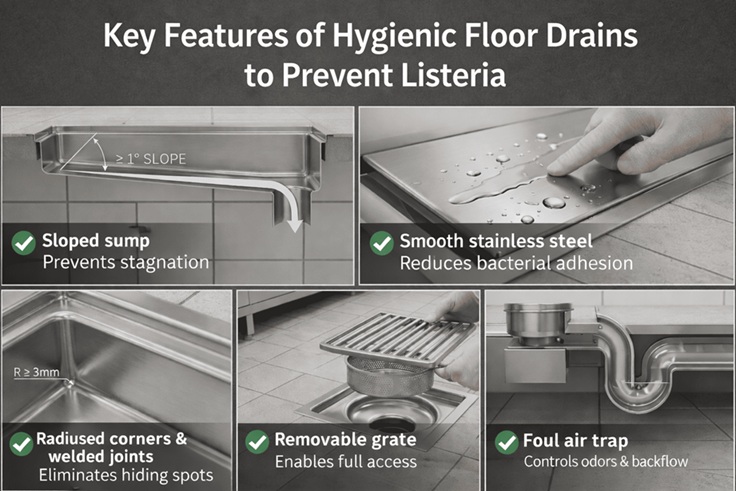
Hygienic floor drain design prevents harborage from the start. Follow principles from EHEDG and industry best practices:
- Use smooth stainless steel surfaces that are non-porous and corrosion-resistant.
- Include sloped sumps (at least a 1° slope) to ensure complete drainage.
- Feature radiused corners (minimum 3 mm) and fully welded joints to eliminate crevices.
- Install removable grates with curved joints for easy disassembly and thorough cleaning.
- Add foul air traps (FAT) to block odors and pests without overlapping parts.
- Hygienically designed drains can be cleaned in under 10 minutes versus hours for standard models, significantly improving processing hygiene and Listeria control.
How to Monitor Drains and Catch Listeria Early
Environmental monitoring is key to Listeria prevention in RTE food facilities. It helps detect the pathogen in the environment—especially in high-risk areas like drains—before it reaches products.
Simple Steps for Effective Drain Monitoring
- Focus on high-risk drains: Especially in wet, raw food, and refrigerated RTE zones near production lines.
- Sample regularly: Swab drains weekly (or more frequently after positives) using sponge or swab kits with neutralizers.
- Test smart: Use ATP for quick hygiene checks, plus PCR or culture methods for Listeria confirmation.
- Track trends: Log results and monitor for repeated positives in the same locations.
- Act fast: When Listeria is detected, intensify cleaning, re-sample, and address root causes such as poor design or biofilm formation.
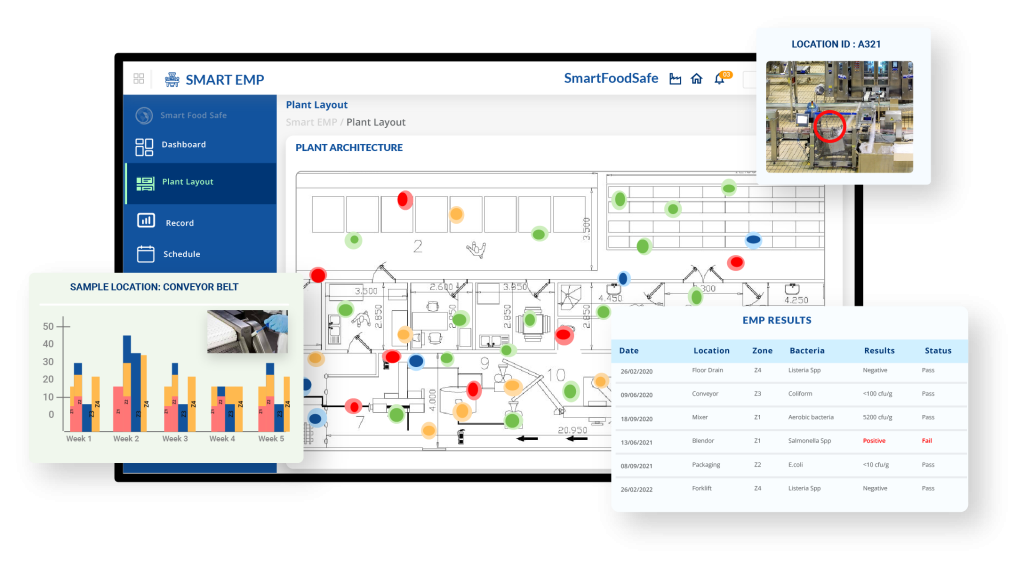
Make Monitoring Easier with Smart EMP Software
Tools like Smart EMP simplify environmental monitoring by:
- Automating sampling schedules and reminders
- Displaying facility maps with contamination hotspots
- Tracking trends and issuing alerts for positive results
- Recording corrective actions with complete audit trails
Solutions to Common Challenges in Drain Hygiene
Drain hygiene plays a critical role in Listeria prevention for ready-to-eat foods, but facilities often face practical hurdles. Below are the most common challenges, along with clear, actionable solutions that address both technical and human factors.
Challenge 1: Persistent Biofilms and Hard-to-Clean Spots
Solution: Use enzymatic cleaners combined with mechanical scrubbing using long-handled brushes, followed by hot-water flushing and rotating disinfectants (such as quaternary ammonium and peracetic acid) to prevent resistance. For deep or inaccessible areas, implement steam cleaning or targeted bacteriophage applications.
Challenge 2: Time and Labor Constraints
Solution: Prioritize high-risk drains through a simple risk-based assessment. Schedule weekly deep cleans and quick daily flushes in critical zones. Reduce manual effort by introducing automation, such as UV lights in drain sumps or self-draining hygienic designs.
Challenge 3: Resource Limitations in Smaller Operations
Solution: Focus first on the most vulnerable drains. Invest in affordable, high-impact tools like color-coded brush sets and bulk enzymatic cleaners. Partner with sanitation specialists for periodic deep interventions to maximize results without straining the budget.
Challenge 4: Inconsistent Staff Compliance and the Human Factor
Solution: Build a strong hygiene culture around drain cleaning. Train all team members—not just sanitation staff—on why drains matter using simple visuals of biofilms and real outbreak examples. Enforce strict color-coding (red tools and buckets for drains and floors only), require footwear or boot changes when leaving wet zones, and mandate full PPE changes before touching RTE foods or surfaces. Post short pictorial SOPs at each drain station, review logs during quick weekly huddles, encourage no-blame reporting of issues such as pooling water or odors, and recognize good performance with shout-outs or small rewards. When drain hygiene becomes “how we do things here,” staff become the strongest defense against Listeria.
In RTE food safety, drain hygiene is foundational. By addressing floor drains through strong design, effective biofilm removal, proactive monitoring, staff training, and barrier strategies, facilities can interrupt Listeria’s lifecycle and protect consumers.
In the battle against Listeria, what happens below the floor matters just as much as what happens on it. Prioritizing drain hygiene today helps prevent outbreaks tomorrow, ensures regulatory compliance, safeguards public health, and protects your brand.